Learn the requirements for a valid prenuptial agreement in Florida, including signing requirements and what terms you can and can't include in your contract.
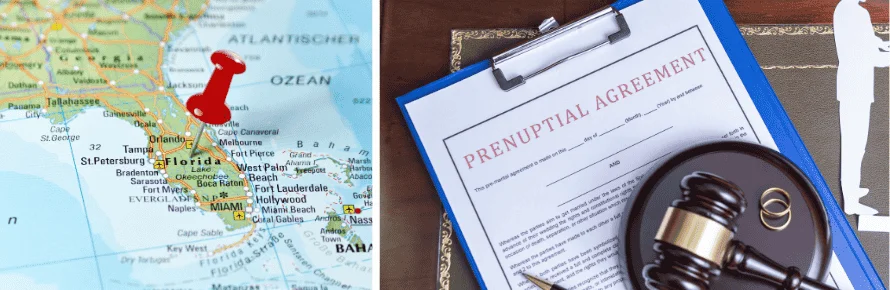
Before the 1980s, many states refused to enforce prenuptial agreements on public policy grounds, as courts viewed them as encouraging divorce. The legal landscape began to change when many states adopted the Uniform Premarital Agreement Act (UPAA). Today, all 50 states recognize and enforce prenuptial agreements ("prenups" for short). Rather than harming marriages, prenups allow couples to determine their own financial destiny should the marriage end.
Prenuptial agreement laws vary from state to state. Here's an overview of what Florida requires for a valid, enforceable prenuptial agreement.
In This Article
- What Is a Prenuptial Agreement?
- Who Should Get a Prenuptial Agreement?
- What Issues Can a Prenuptial Agreement Cover?
- Can a Prenuptial Agreement Determine Child Custody and Child Support in Florida?
- Basic Rules to Make a Valid Prenup in Florida
- When a Court Might Not Enforce a Prenup in Florida
- Getting Legal Help
What Is a Prenuptial Agreement?
A prenuptial agreement (also called a “premarital agreement” in Florida) is a contract between two people who plan to marry that allows the couple to opt out of Florida's "equitable distribution" rules and decide for themselves how their property and debt will be divided if the marriage ends in divorce. Prenups can also cover issues like alimony (spousal support) and inheritance rights (more on that below).
To learn more about prenups generally, check out: Should You Get a Prenup? What It Is, How It Works, and What to Include.
Who Should Get a Prenuptial Agreement?
Prenups are no longer just a tool for the wealthy; more and more couples are using prenups to protect their assets and shield themselves from their partner's debts.
People who might benefit from a prenup include:
- anyone with substantial premarital assets that they want to keep as separate property
- anyone who is marrying someone who has substantial debts, such as student loans or credit card debt
- parents who want to protect the inheritance rights of children from a prior relationship
- business owners who want to keep their business (and its future growth) separate property
- anyone who receives a substantial gift from their family (such as a down payment for a house) and wants to protect it, and
- anyone who wants to decide up front whether one spouse will pay alimony, rather than leaving it to a judge to decide.
What Issues Can a Prenuptial Agreement Cover?
Florida law allows couples to enter into any prenuptial agreements that don’t violate criminal law or public policy. Couples typically use these agreements to determine:
- Property rights. Who has the right to buy, sell, or manage property during the marriage?
- Asset and debt division. How will the couple divide their property in the event of divorce?
- Alimony. Will either spouse pay the other alimony after a divorce, and if so, for how much and how long?
- Estate planning. Who inherits what when one spouse dies (along with wills and trusts)?
- Choice of law. Which state’s laws will be used to interpret the agreement, if necessary?
(Fla. Stat. § 61.079(4) (2025).)
Can a Prenuptial Agreement Determine Child Custody and Child Support in Florida?
A prenuptial agreement can’t affect child custody or child support in Florida. Judges must calculate child support at the time of parents’ separation or divorce based on their current abilities to pay and the child’s current needs. Also, the right to child support belongs to the child, and parents can’t bargain away their obligation to pay it.
Similarly, judges determine child custody based on the child’s best interests at the time of separation or divorce. Parents can also address child support and child custody in a divorce settlement agreement, subject to a judge's approval, but any attempt to pre-determine these issues in a prenup is unenforceable.
Basic Rules to Make a Valid Prenup in Florida
Florida adopted the Uniform Premarital Agreement Act (UPAA) effective October 1, 2007. Agreements signed on or after this date are governed by this specific statute, which lays out strict rules for enforceability.
For a prenuptial agreement to be valid in Florida, it must be:
- in writing
- signed by both partners.
The agreement doesn't have any effect until the couple is legally married.
(Fla. Stat. § 61.079(3) (2025).)
When a Court Might Not Enforce a Prenup in Florida
In Florida, a prenup may be challenged and declared unenforceable if a spouse can prove:
- Involuntariness. They didn’t sign the agreement voluntarily.
- Fraud, Duress, or Coercion. The agreement was only signed because of fraud (like lying about assets), duress, or extreme pressure.
- Unconscionability. The agreement was unconscionable (shockingly unfair) when the couple signed it, and the spouse challenging the agreement:
- wasn’t given a fair and reasonable disclosure of the other spouse’s finances
- didn’t voluntarily waive, in writing, the right to receive a fair disclosure of the other spouse’s assets and debts, and
- didn’t have or couldn’t reasonably have known about the other spouse’s financial circumstances.
(Fla. Stat. § 61.079(7) (2025).)
Getting Legal Help
Prenuptial agreements can be a useful tool for couples who want to set clear financial expectations and avoid conflict down the road. If you're thinking about a prenup, or your partner has asked you to sign one, it's best to consult with a family law attorney.
Hiring an attorney isn't strictly necessary for a prenup to be valid in Florida, but judges are more likely to enforce agreements when each partner has had independent counsel. Having your own attorney will ensure you understand what you're signing, help prevent claims that the agreement was signed under duress, and confirm that your agreement matches your intentions.
To learn more, check out: Florida Divorce and Family Law.

In This Article
- What Is a Prenuptial Agreement?
- Who Should Get a Prenuptial Agreement?
- What Issues Can a Prenuptial Agreement Cover?
- Can a Prenuptial Agreement Determine Child Custody and Child Support in Florida?
- Basic Rules to Make a Valid Prenup in Florida
- When a Court Might Not Enforce a Prenup in Florida
- Getting Legal Help