Your appearance matters in family court. Here are some tips on how to dress appropriately for in-person and remote hearings.
Going to court is always stressful, but family court can be especially fraught because the outcome impacts the most personal aspects of your life.
Whether you are fighting for child custody, the family home, or spousal support, you want to make a good impression on the judge and send a message that you’re credible and responsible. The right clothes can help. Here are some tips on what to wear so the judge focuses on the facts of your case, rather than your outfit.
Why Does Appearance Matter in Family Court?
You might think that the facts of your case speak for themselves, but in family law, your credibility is always going to be a factor in the judge’s decision-making. And judges, like all humans, form rapid first impressions about people based on limited cues like appearance and body language.
If you’re asking to be responsible for making important decisions about your child’s life (legal custody), or if you want the judge to believe you when you say that your spouse is hiding assets, you want to look reliable and trustworthy. So, choose an outfit that sends the message you want.
You won’t win your case solely based on the judge’s first impression of your clothes and grooming, but if you show up to court looking inappropriate or disheveled, the judge might make the wrong assumptions about you.
Is There a Dress Code for Family Court?
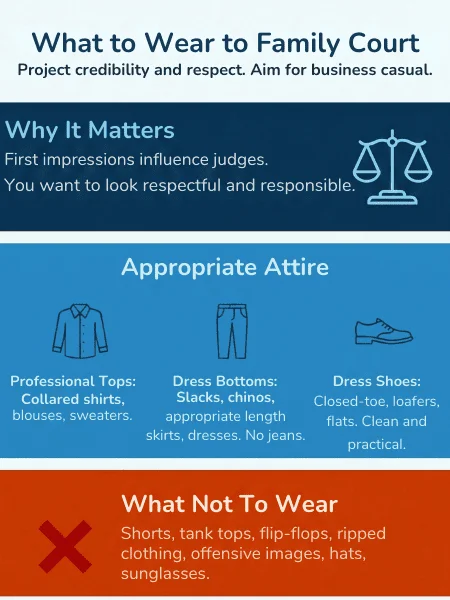
Many courts post suggestions of what not to wear to court, which often includes items like shorts, tank tops, and sunglasses (more on what not to wear below). But complying with the minimum standards isn’t enough to help your case.
To make a good impression, dress like you’re going to a job interview at an office, a religious service, or a special occasion like a graduation ceremony. Some people call this style of dress “business casual.”
Your clothes don’t have to be new, but they should be clean, unwrinkled, properly fitting, and modest. The goal is to keep your look simple and professional.
What Should Women Wear to Family Court?
Women often have a wider variety of clothing options than men, which can make deciding what to wear more challenging. Here are some suggestions:
- Tops: Button-down shirts and sweaters are safe choices. Some courts forbid plunging necklines, so make sure you aren’t showing too much skin. If you want to wear a sleeveless or short-sleeve shirt, put a cardigan or blazer over it.
- Pants: Dress pants or slacks are appropriate. Pants shouldn’t be too tight or too baggy. Avoid leggings and athleisure. A nice pair of non-ripped jeans might work in some places, but you might look too casual.
- Dresses and skirts: A skirt or a dress can be a good look if the length is appropriate when you’re standing and sitting down.
- Shoes: Your shoes should be clean, comfortable, and closed-toe. You might have to park far away from the courthouse or stand in line at the clerk’s office, so practical shoes are best. Save the strappy heels and stilettos for another occasion.
- Accessories and makeup: Jewelry and makeup should be simple and minimal. You don’t want to distract the judge with over-the-top looks.
What Should Men Wear to Family Court?
Men aren’t required to buy a suit to appear in family court. If you have one that’s in good shape, you can wear it. Lawyers wear suits to court, so you’ll blend in. Other options include:
- Shirts: A collared shirt is a must. A classic button-down shirt is best. A simple polo shirt might also work in some places, too, but a tucked-in button-down is the safest bet.
- Ties: A tie is optional, but it can send a positive signal that you are taking the proceedings seriously.
- Pants: Well-fitting dress slacks, chinos, or khakis all work well. Avoid wearing ripped jeans or cargo pants.
- Shoes: Dress shoes, loafers, or clean sneakers tend to work best with business casual pants. Don’t wear flip-flops or slides.
- Hair: Your hair and facial hair should be clean and neat. If you have a beard, mustache, or goatee, keep it trimmed. If you don’t, make sure you’re cleanly shaven.
What Not to Wear to Family Court
Many courts post a list of specifically banned attire on their website or near courthouse security. Here are some examples from California, New York, and Texas.
Lists of unacceptable courtroom attire typically include:
- no shorts
- no tank tops
- no cropped tops
- no plunging necklines
- no hats
- no non-prescription sunglasses
- no torn clothing
- no flip flops, and
- no clothing with offensive or obscene images.
If you wear clothing that is specifically banned, you could be refused entry into court. However, remember that complying with the minimum dress code is the floor, not the ceiling. You want to do more than not get kicked out of court by security—you want to make a good impression.
How to Dress for Remote Family Court Hearings
When the COVID pandemic disrupted in-person court operations, courts had to pivot to remote hearings (via platforms like Zoom). Some courts have continued to use remote hearings post-pandemic for routine family court hearings.
If you’re making a remote appearance, don’t make the mistake of treating it casually. The same written (and unwritten) courtroom dress code rules apply to video calls. In addition, here are some dos and don’ts for dressing for the camera:
- Do dress fully from top to bottom. Don’t make the mistake of wearing a dress shirt on top and pajamas on the bottom. You might have to stand up during the hearing.
- Do wear solid colors. Some patterns that look nice in person look distracting on camera. Simple is better on camera.
- Do consider lighting. Sit facing a window or a lamp so the judge can see your face.
- Don’t ignore your background. Think about what else the judge will see in the frame. If you can’t find a clean, neutral space for the call, consider using a professional virtual background. This is not the time to play with funny filters. You don’t want to be the next “Cat Lawyer.”
Final Tips for Your Family Law Court Date
If you’re represented by a family law lawyer, ask your attorney for advice on how to dress for court. Your lawyer will know about local courthouse customs and judges’ specific quirks.
Dressing well for court doesn’t guarantee a particular outcome. Judges ultimately decide cases based on the facts and the law. However, presenting yourself as a respectful, responsible adult can only help your cause.
